01 clause.ai

AI PRODUCT DESIGN

role: ux design & research

01 clause.ai

AI PRODUCT DESIGN

role: ux design & research

imagine going through 100s of contracts everyday :(

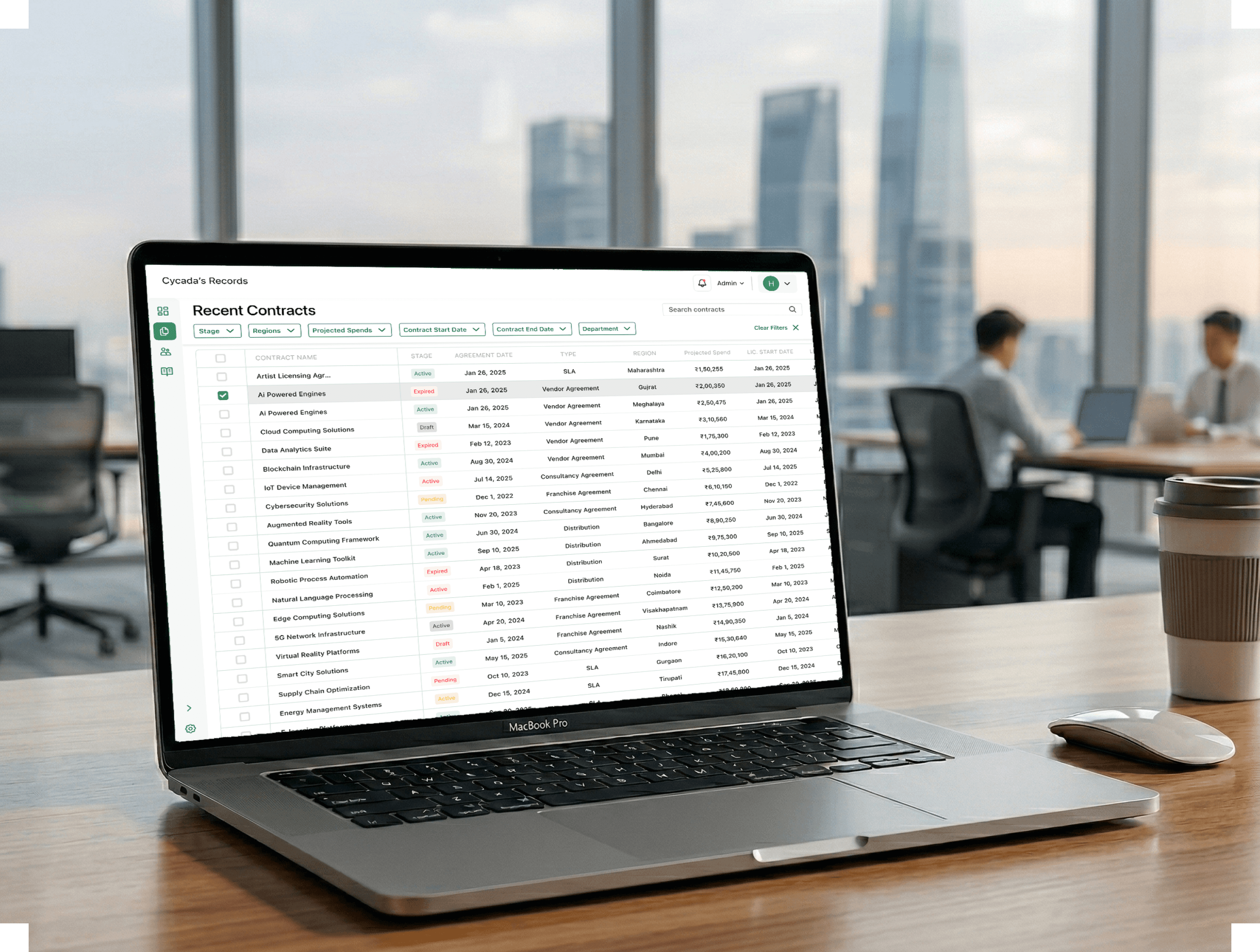
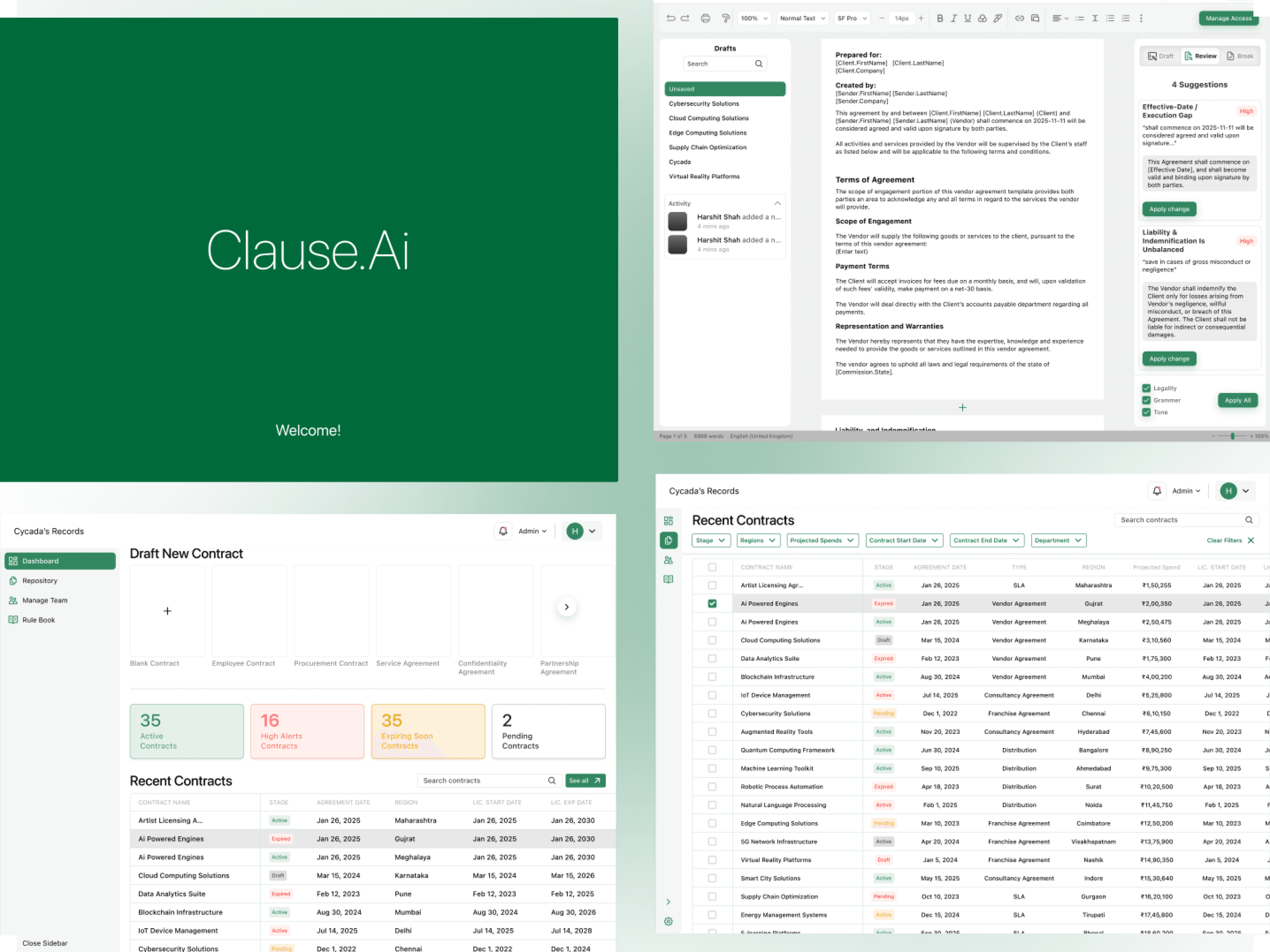
Clause.AI is a specialized AI-powered legal drafting and contract management platform designed for Indian MSMEs, freelancers, and enterprise legal teams, people who deal with complex B2B contracts daily but lack the legal bandwidth to manage them safely. The project involved deep primary and secondary research across legal, HR, procurement, and operations stakeholders to understand where existing tools fail. The outcome was not just a product design but a novel interaction framework, the dual-track Model Oriented Design, which treats the AI model itself as a stakeholder in the design process, addressing the gap between how AI behaves and how users experience that behavior.
84%

84%

of Indian MSMEs struggle with contract complexity,

70%

70%

lack dedicated legal support during drafting and review.

82%

82%

find overall inefficiencies in their current contract process

24%

24%

are decently familiar with the use of AI in this field
50 Survey Respondents

50 Survey Respondents

“80-90% of my time is dedicated purely to contracts"

“80-90% of my time is dedicated purely to contracts"

“Sabse key concern toh client data ki hai... where does that information go?"

“Sabse key concern toh client data ki hai... where does that information go?"

“Repository issues, no clear management. Companies still use drives and communicate via email”

“Repository issues, no clear management. Companies still use drives and communicate via email”

“Sabse key concern toh client data ki hai... where does that information go?"

“Sabse key concern toh client data ki hai... where does that information go?"

“boss will suddenly ping me asking for a specific clause... I m stuck scrolling through a 50-page PDF"

“boss will suddenly ping me asking for a specific clause... I m stuck scrolling through a 50-page PDF"

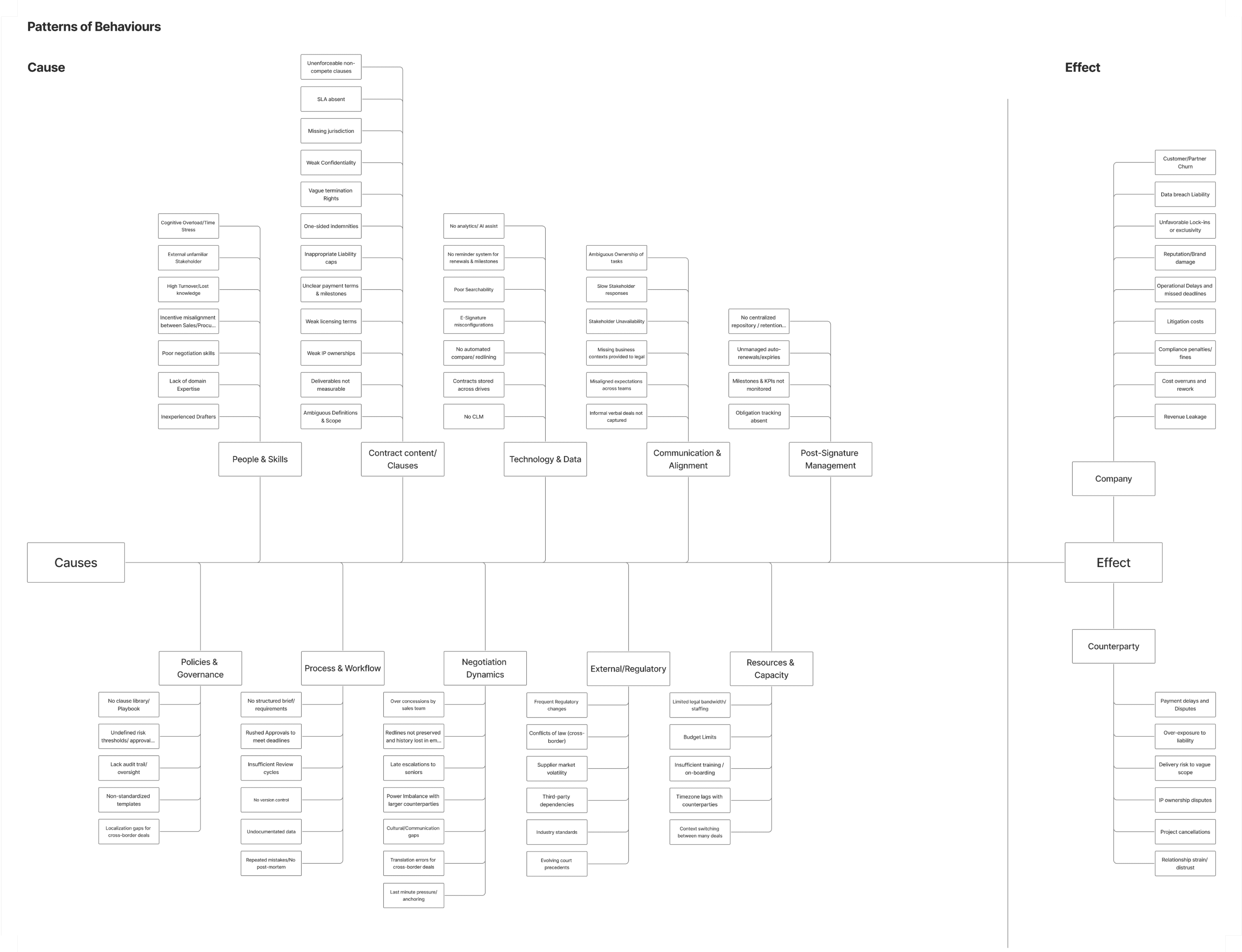
ishikawa Diagram

ishikawa Diagram

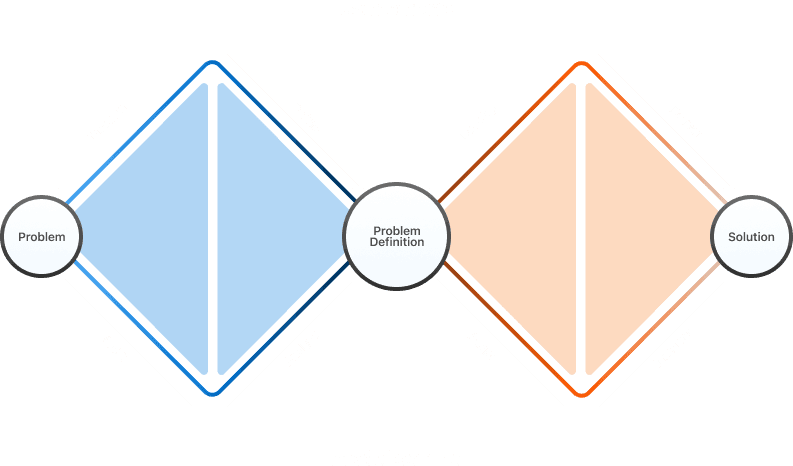
the model oriented design framework

the model oriented design framework

Audit — find where the model breaks and why.

Analyze — identify the root cause and define what better looks like.

Adapt — design fixes: prompts, fallbacks, self-correction strategies.

Integrate — surface the model's intelligence into the UI.
algorithms for self correction

algorithms for self correction

Implement a self-reflection loop (like Reflexion or ReAct) combined with confidence scoring. Use gradient-based fine-tuning on feedback and backpropagation from user edit logs to improve over time.
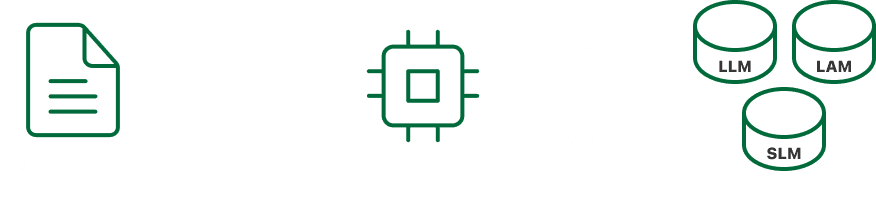
Task handling

Task handling

Break down tasks into modular flows, segmentation, classification, benchmarking, retrieval, and redlining, each with its own validation layer. Maintain a clear state tracker so the model always “knows” what step the user or clause is in.

Clause.Ai

Clause.Ai

02 NANDI

System Design / Governance

Role: Product Design, UX Writing

02 NANDI

System Design / Governance

Role: Product Design, UX Writing

SO MANY COWS ON THE STREET MAN…

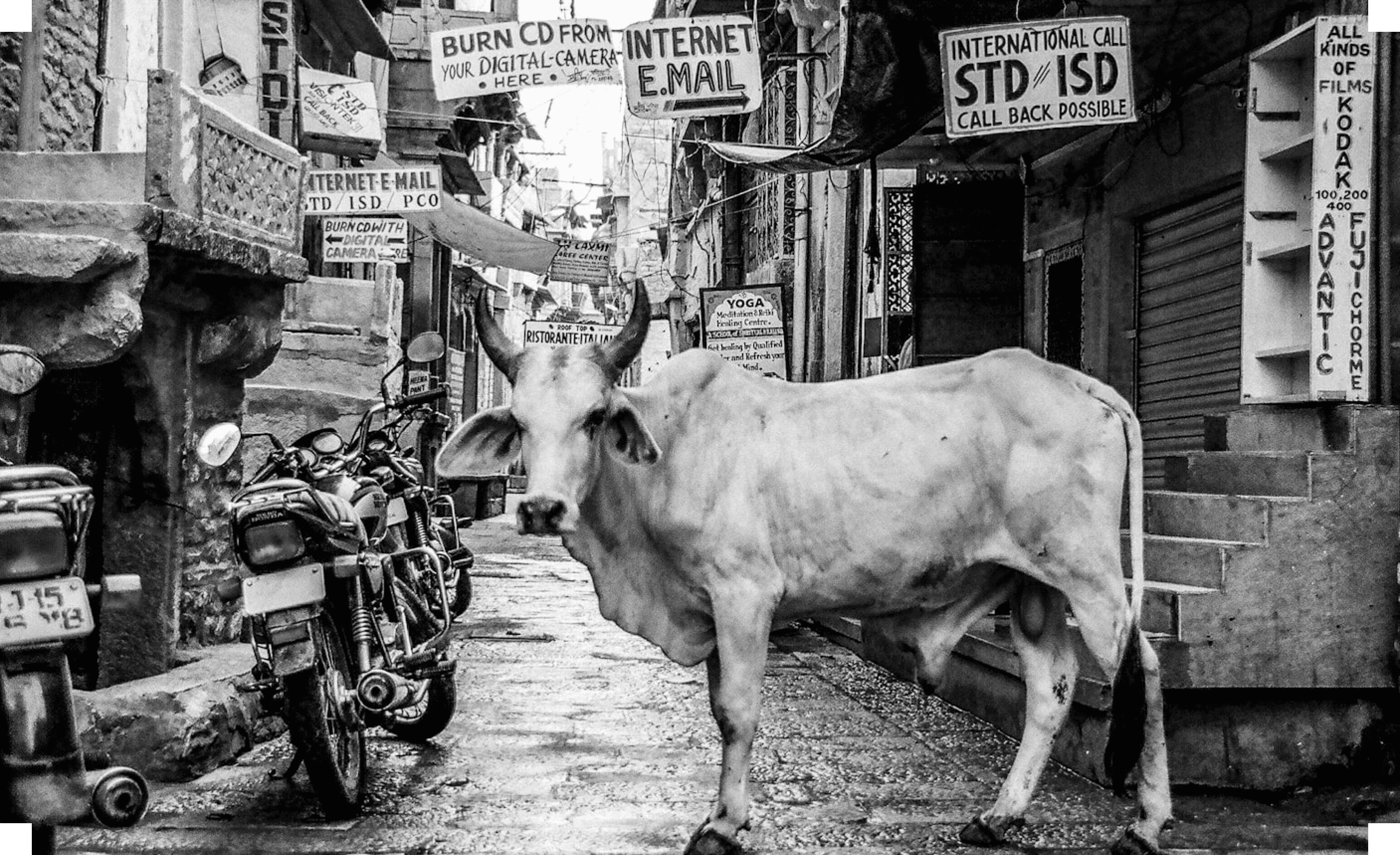
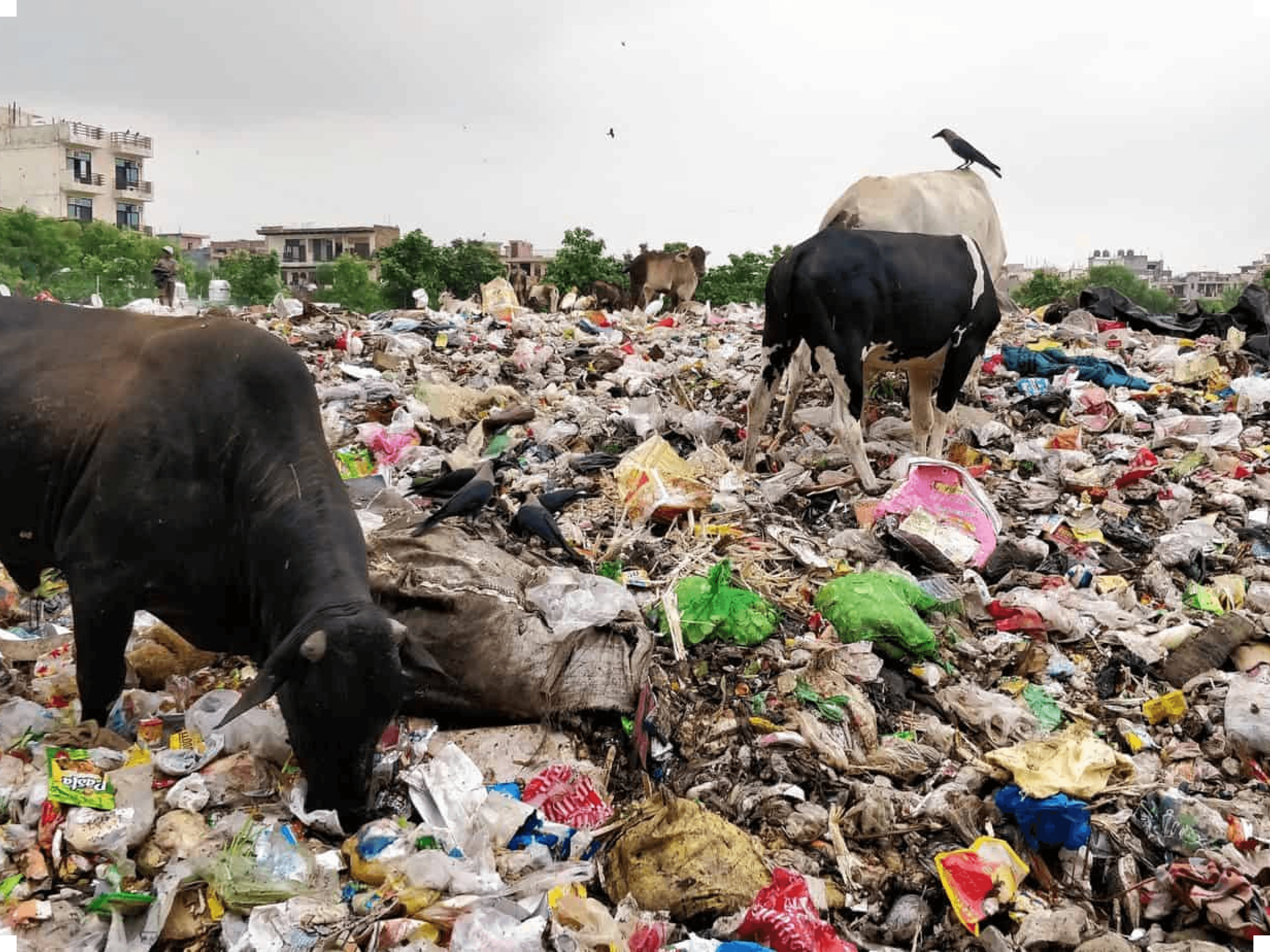
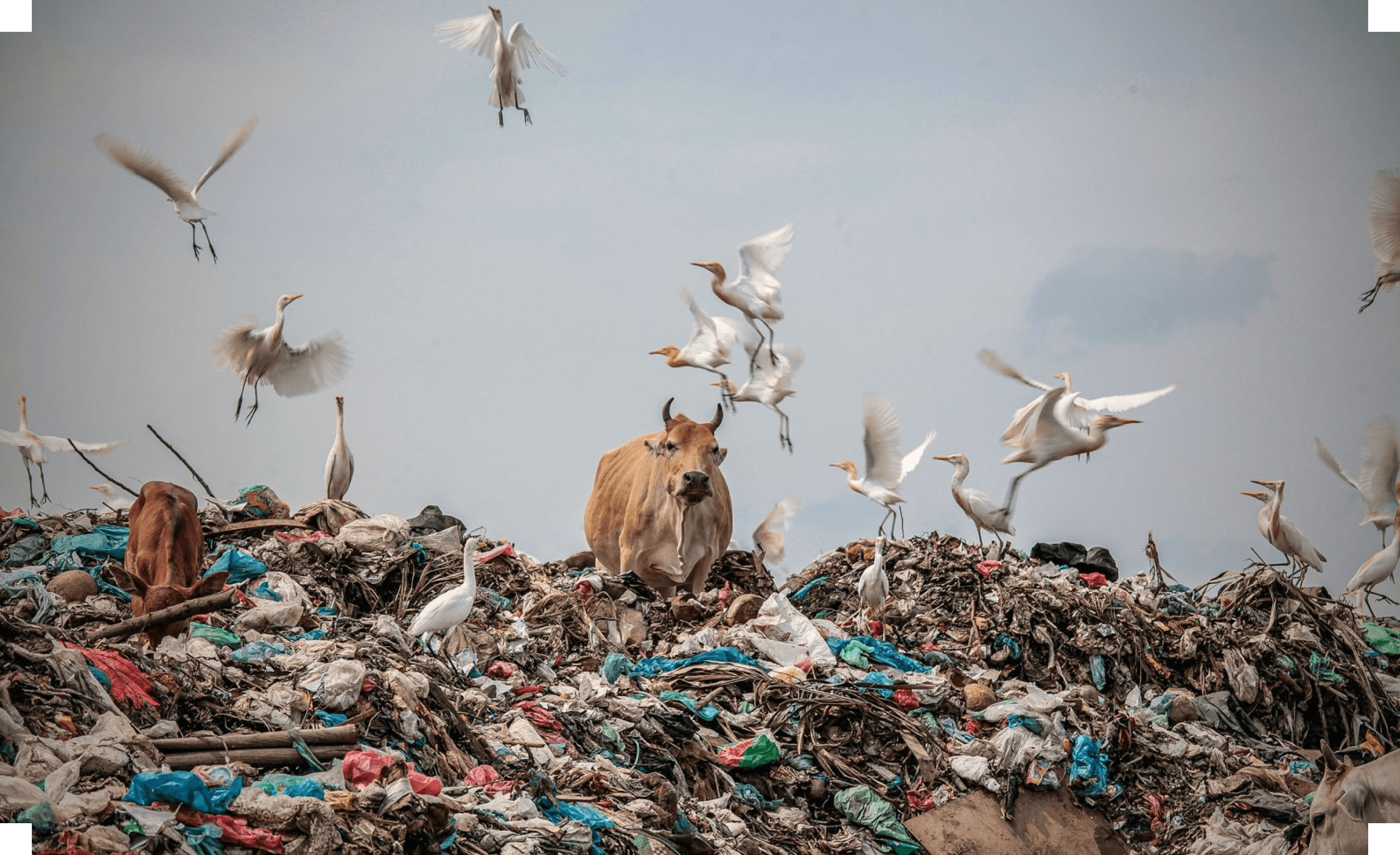
India's urban streets see thousands of abandoned cattle annually, a consequence of economic pressure on farmers, strict livestock laws, and a cultural reverence that makes culling impossible. NANDI is a two-pronged government UX system that tackles the problem differently on each side: a WhatsApp and phone helpline for urban citizens to report stray or injured cattle, and a Pashu-Aadhar inspired rural registration system operated through upgraded dairy co-operatives called Nandi Kendras. Grounded in ethnographic field research across Yerwada village, Alibaug, and urban Pune, spanning temples, farms, dairy shops, cattle racing events, and interviews with police and commuters, the project applies systems thinking to a problem that is simultaneously cultural, economic, and infrastructural.
68%

68%

of stray cattle consume plastic from urban garbage dumps

of stray cattle consume plastic from urban garbage dumps

23%

23%

of them die from it.

of them die from it.

5million

5million

Stray cattle across India

900+

900+

deaths in Haryana alone in five years.
Field research time!

Field research time!

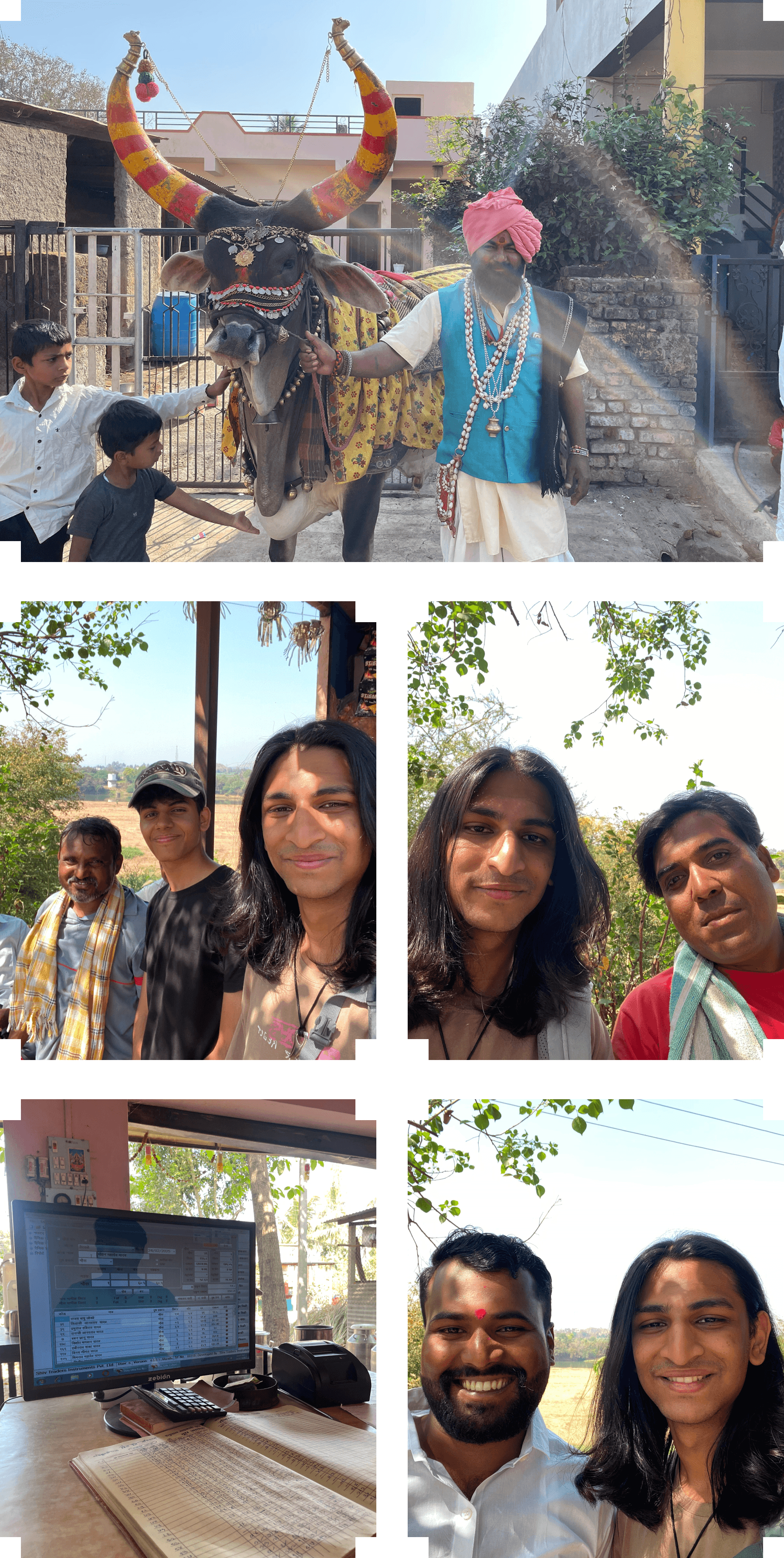
For Rural Insight, my team and i visited multiple villages in Karad, Alibaug, and on the outskirts of Pune.

As for Urban research, we spoke with multiple civilians, police officers, gaushalas, temples and dairy owners

For Rural Insight, my team and i visited multiple villages in Karad, Alibaug, and on the outskirts of Pune.

As for Urban research, we spoke with multiple civilians, police officers, gaushalas, temples and dairy owners

01 The Farmer’s insight

01 The Farmer’s insight

Farmers emotionally prefer gaushalas but economically choose slaughterhouses because slaughterhouses come to them. When you asked if humane shelters offered the same service, the unanimous answer was yes.

Farmers emotionally prefer gaushalas but economically choose slaughterhouses because slaughterhouses come to them. When you asked if humane shelters offered the same service, the unanimous answer was yes.

02 The digitisation

02 The digitisation

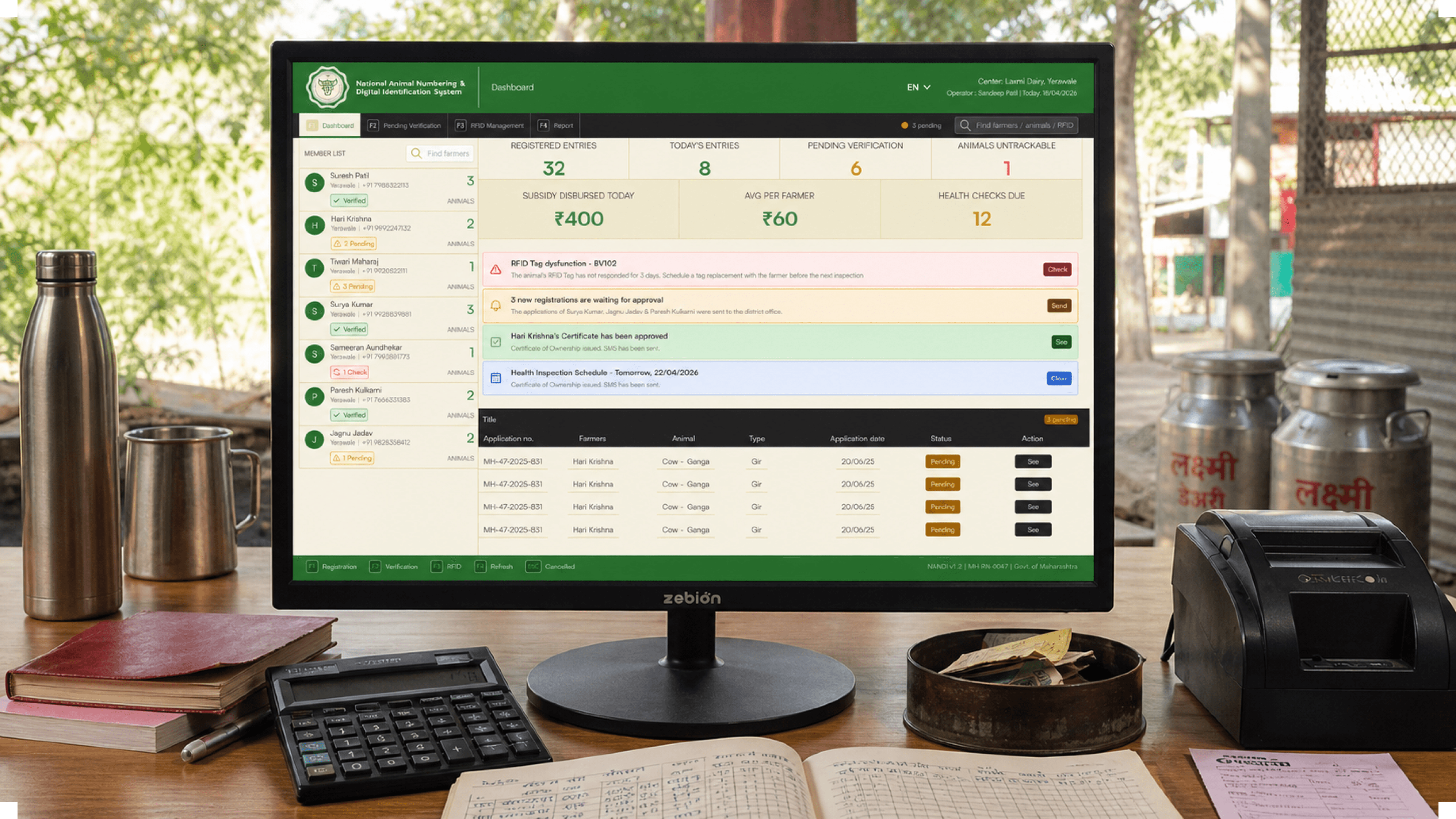
Dairy co-op operators already have desktop setups and aren't intimidated by complex software, this insight told us that a digital solution is not only feasible but also can be designed around an already existing system.

Dairy co-op operators already have desktop setups and aren't intimidated by complex software, this insight told us that a digital solution is not only feasible but also can be designed around an already existing system.

03 The unsupervised grazing revelation

03 The unsupervised grazing revelation

Most "abandoned" cattle aren't actually abandoned. They're let out to graze by urban milk businessmen who profit from the perception that unpasteurized milk is healthier.

Most "abandoned" cattle aren't actually abandoned. They're let out to graze by urban milk businessmen who profit from the perception that unpasteurized milk is healthier.

04 Bulls are disproportionately abandoned

04 Bulls are disproportionately abandoned

Owners have zero economic incentive to keep bulls since they produce no milk.

Owners have zero economic incentive to keep bulls since they produce no milk.

05 the two-pronged realisation

05 the two-pronged realisation

After research we realised that we were dealing with two completely different problems requiring two different solutions. Urban needs a reactive approach while Rural requires proactive assistance and ease.

After research we realised that we were dealing with two completely different problems requiring two different solutions. Urban needs a reactive approach while Rural requires proactive assistance and ease.

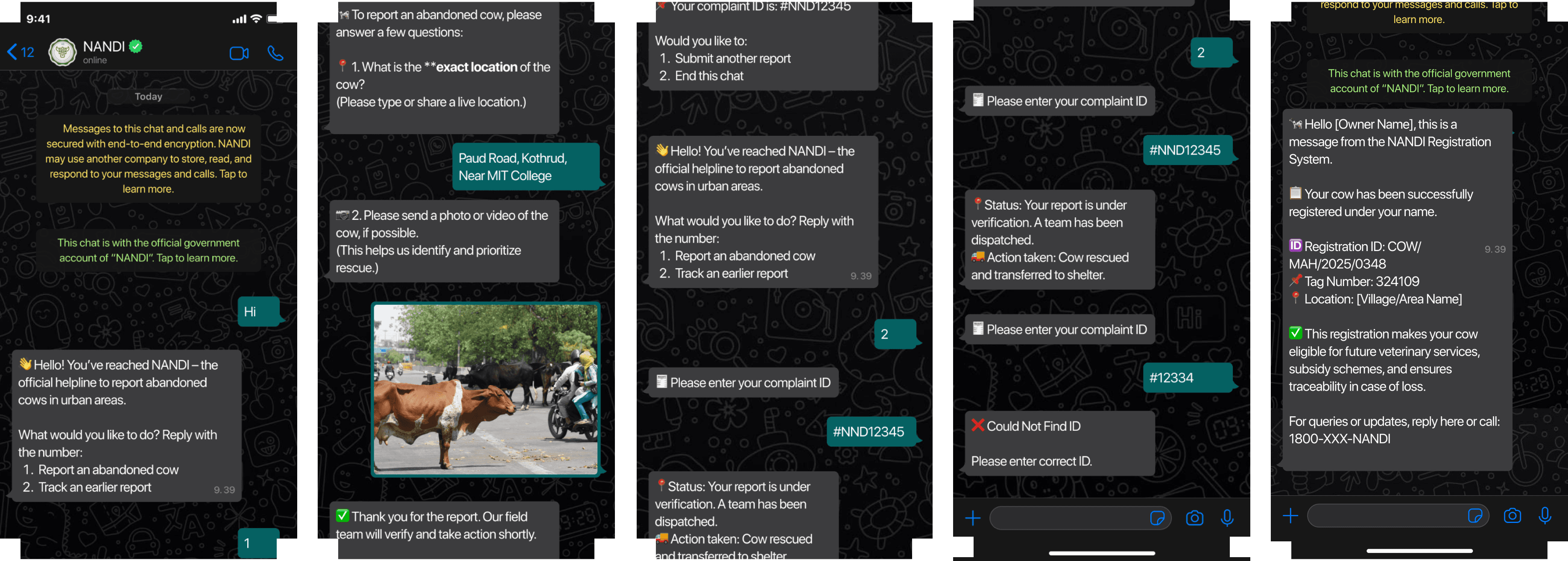
THE URBAN SIDE- The WhatsApp helpline

The WhatsApp helpline in the NANDI system allows urban citizens to report abandoned or injured cows quickly by sending a message, photo, or location. The bot guides users through simple prompts, collects essential details, and forwards the report to local response teams for swift action.
THE rural SIDE- integrated bovine management system

We looked at what already exists and works. Dairy co-operatives. The farmer does not have to “learn a system.”
They just show up. The system is handled around them.
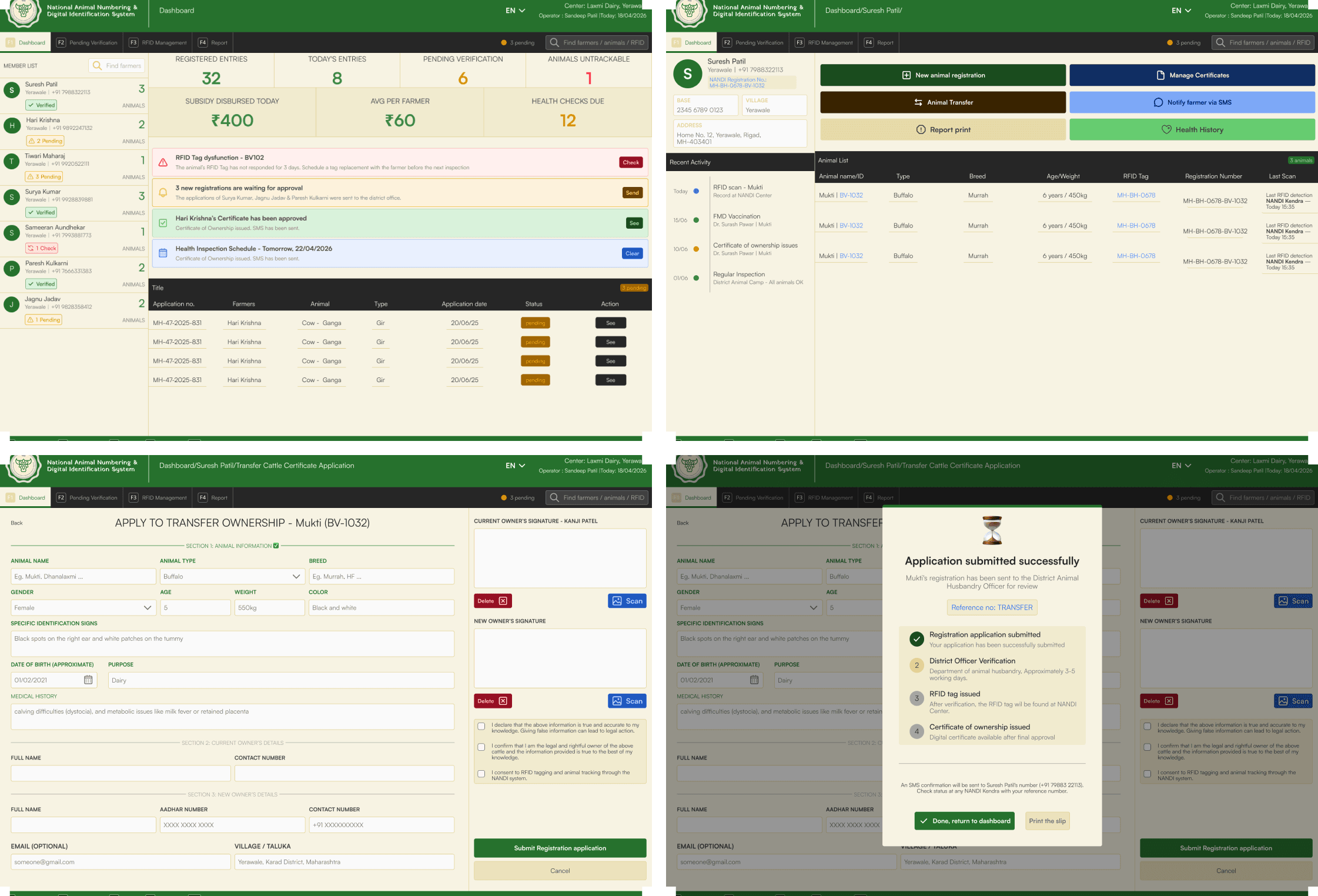
At a Nandi Kendra:

  • Cattle are registered and given a unique digital identity (BUID)

  • RFID tags are installed and linked to ownership

  • Medical records, ownership history, and impoundment data are maintained

  • Government schemes and subsidies are accessed and verified

  • Local authorities step in when accountability is needed


What this does is turn a messy, invisible problem into something trackable and enforceable.


And more importantly, we are not introducing new behavior. We are building on what is already there. Dairy operators already deal with dense systems and records, so they naturally become the primary users. That means less resistance, less confusion, and a much smoother rollout.


So yeah, this is not just about digitizing cattle.


It is about making sure someone is always accountable for them.


Because the real issue was never the cattle.
It was the lack of ownership.

At a Nandi Kendra:

  • Cattle are registered and given a unique digital identity (BUID)

  • RFID tags are installed and linked to ownership

  • Medical records, ownership history, and impoundment data are maintained

  • Government schemes and subsidies are accessed and verified

  • Local authorities step in when accountability is needed


What this does is turn a messy, invisible problem into something trackable and enforceable.


And more importantly, we are not introducing new behavior. We are building on what is already there. Dairy operators already deal with dense systems and records, so they naturally become the primary users. That means less resistance, less confusion, and a much smoother rollout.


So yeah, this is not just about digitizing cattle.


It is about making sure someone is always accountable for them.


Because the real issue was never the cattle.
It was the lack of ownership.

03 CYCADA

Hardware + TUI Experiment

Role: Prototyping, Interaction, Build

03 CYCADA

Hardware + TUI Experiment

Role: Prototyping, Interaction, Build

Cycling data today is either expensive, inaccurate, or just annoying to use And somehow, we’ve all accepted that.

Cycling data today is either expensive, inaccurate, or just annoying to use And somehow, we’ve all accepted that.

Most cyclists rely on phones or expensive bike computers. Phones drain battery, lose GPS in dense areas, and are unsafe to check mid-ride. Bike computers solve this, but at ₹15,000+, they are not built for the average rider in India.

The gap was obvious:

The gap was obvious:

90%

90%

faced GPS inaccuracies

faced GPS inaccuracies

80%

80%

struggled with battery drain

struggled with battery drain

100%

100%

wanted a cheaper alternative

wanted a cheaper alternative

100%

100%

wanted indoor tracking

wanted indoor tracking

80%

80%

wanted real-time data they could trust

wanted real-time data they could trust

So the problem wasn’t tracking.
It was how badly current solutions do it.

So the problem wasn’t tracking.
It was how badly current solutions do it.

Cyclists don’t need another device on their body.
They need something that

Cyclists don’t need another device on their body.
They need something that

works with the cycle itself.

works with the cycle itself.

the concept

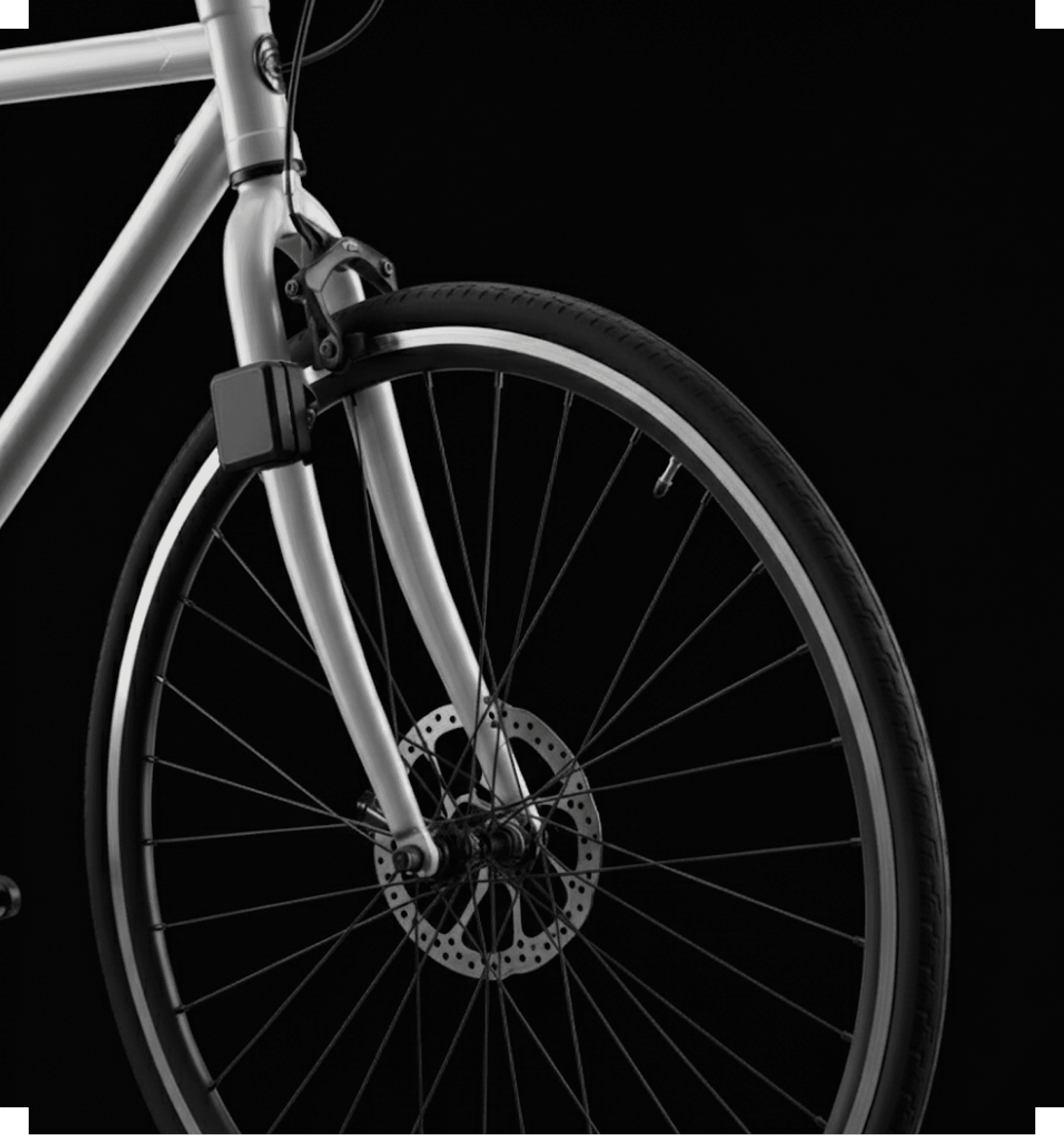
A compact module attached to the cycle tracks motion using:

  • A magnetic sensor for precise wheel rotation

  • An IMU for incline and motion smoothing

  • An ESP32 for processing and wireless transmission

The data is sent in real-time to a phone, where it is visualized, stored, and analyzed.
How it works

How it works

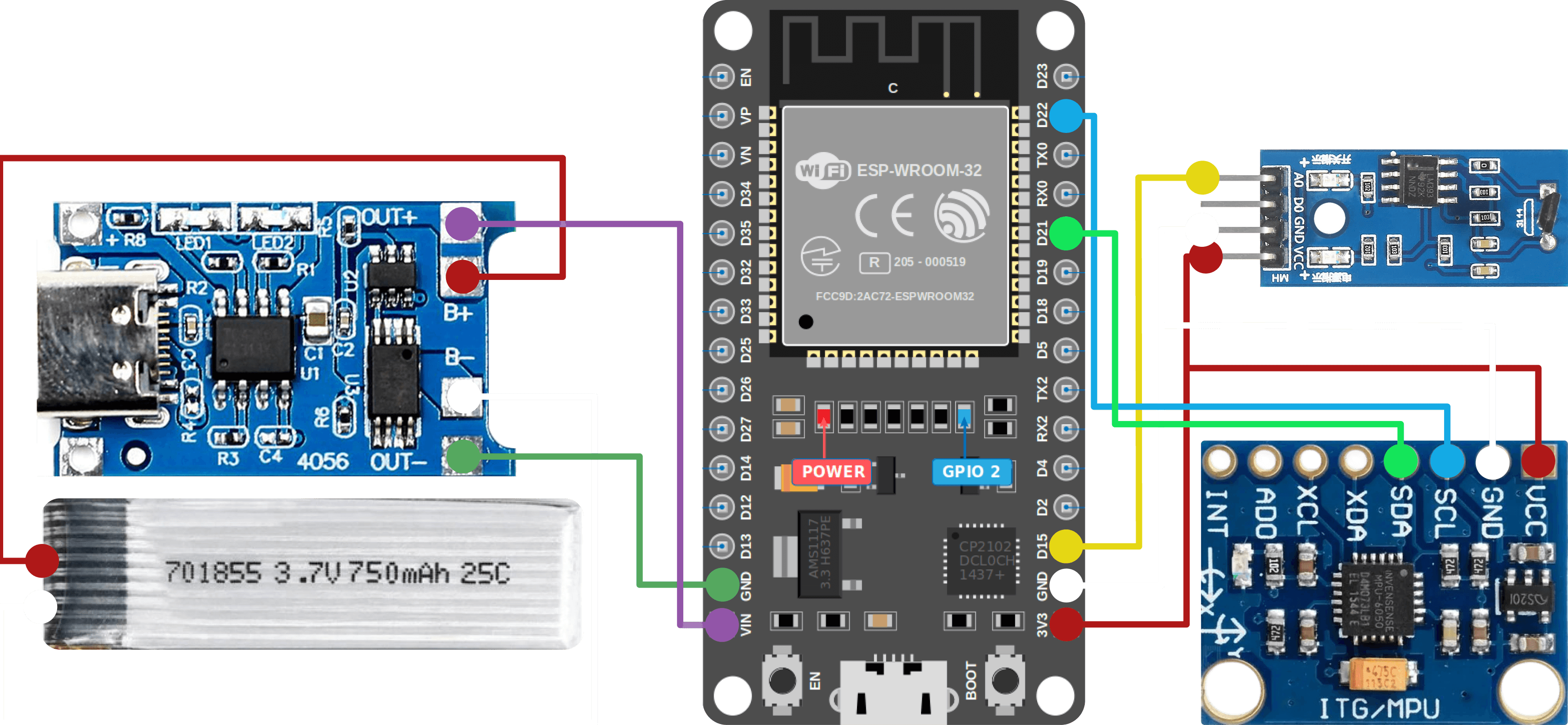
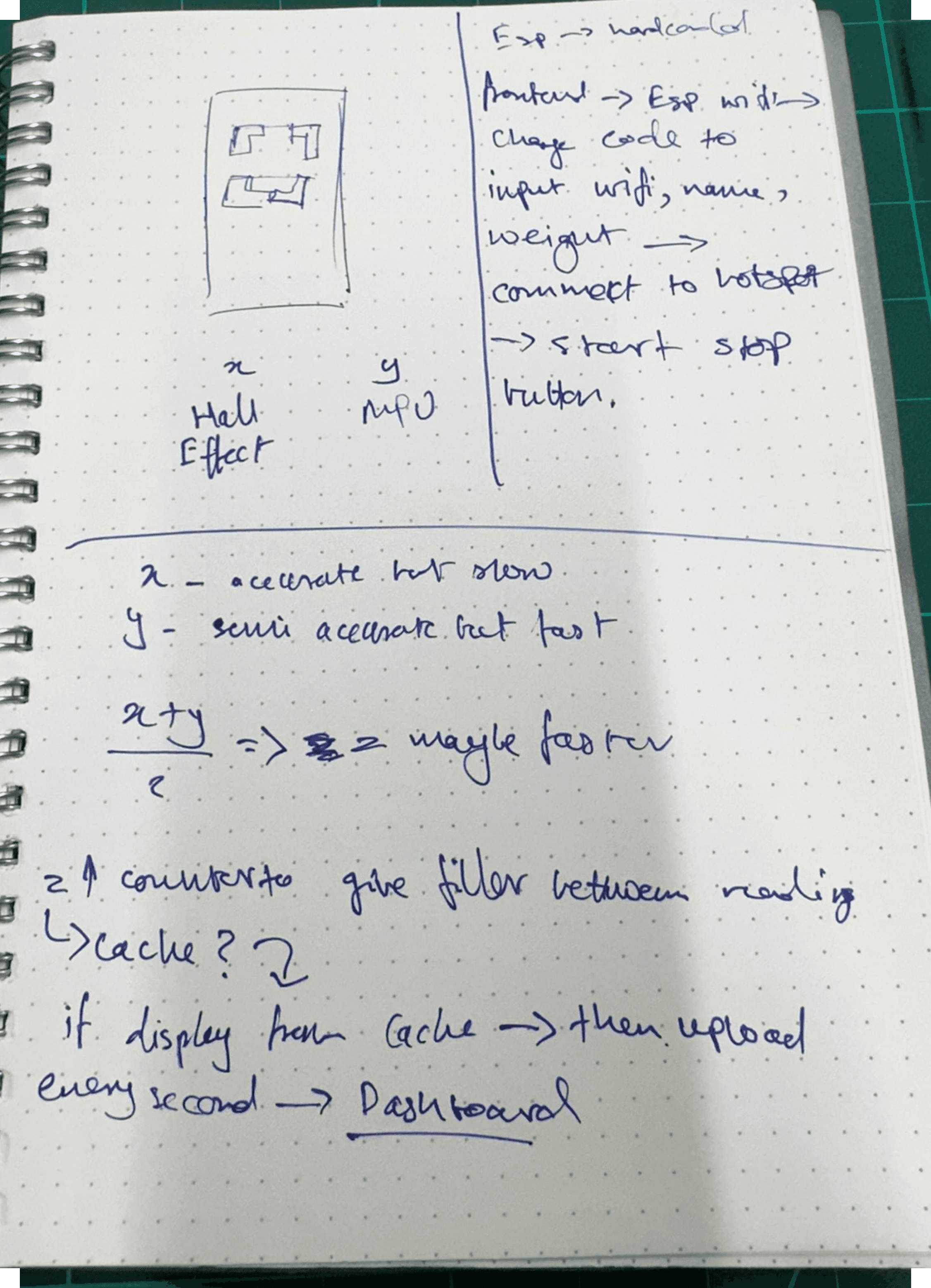
A compact motion-tracking module that combines a reed switch-based magnetic sensor and a 6-axis IMU to calculate real-time wheel speed and movement data. The magnet passing the reed switch provides precise rotational pulses, while the IMU adds orientation, acceleration, and smoothing to fill in gaps and improve accuracy. A 3.7 V Li-ion cell powers the system through a regulated supply, and the ESP32 processes all sensor inputs, converts them into km/h using timing between pulses and IMU stabilization, and transmits the final data wirelessly. Together, these components create a reliable, low-power, self-contained speed-sensing module.
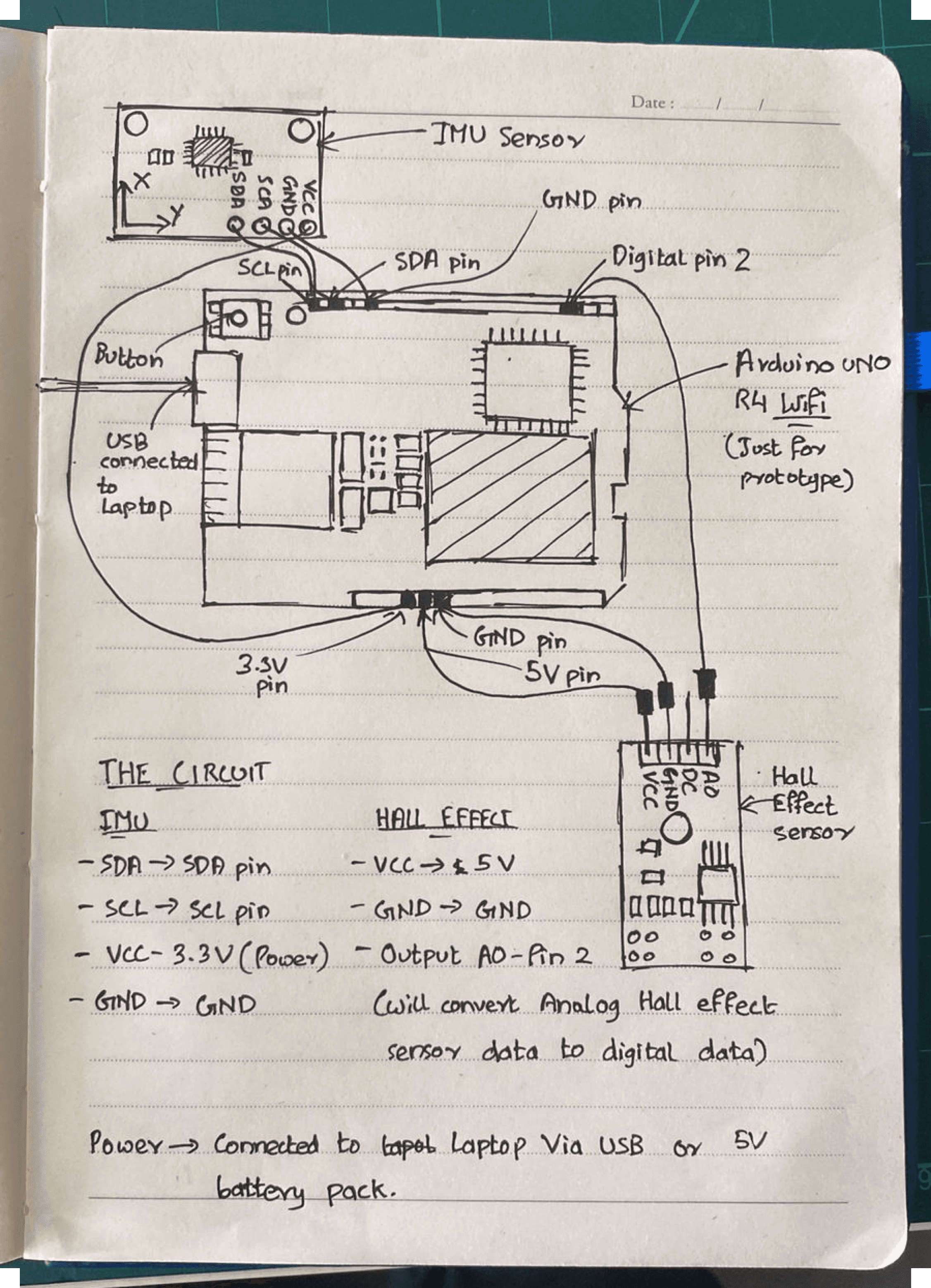
3.7V LiPo Battery (500mAH) → TP4056 USB-C Type Charging Module → Slide Switch → ESP32 → A3144 & MPU6050

3.7V LiPo Battery (500mAH) → TP4056 USB-C Type Charging Module → Slide Switch → ESP32 → A3144 & MPU6050

casing design

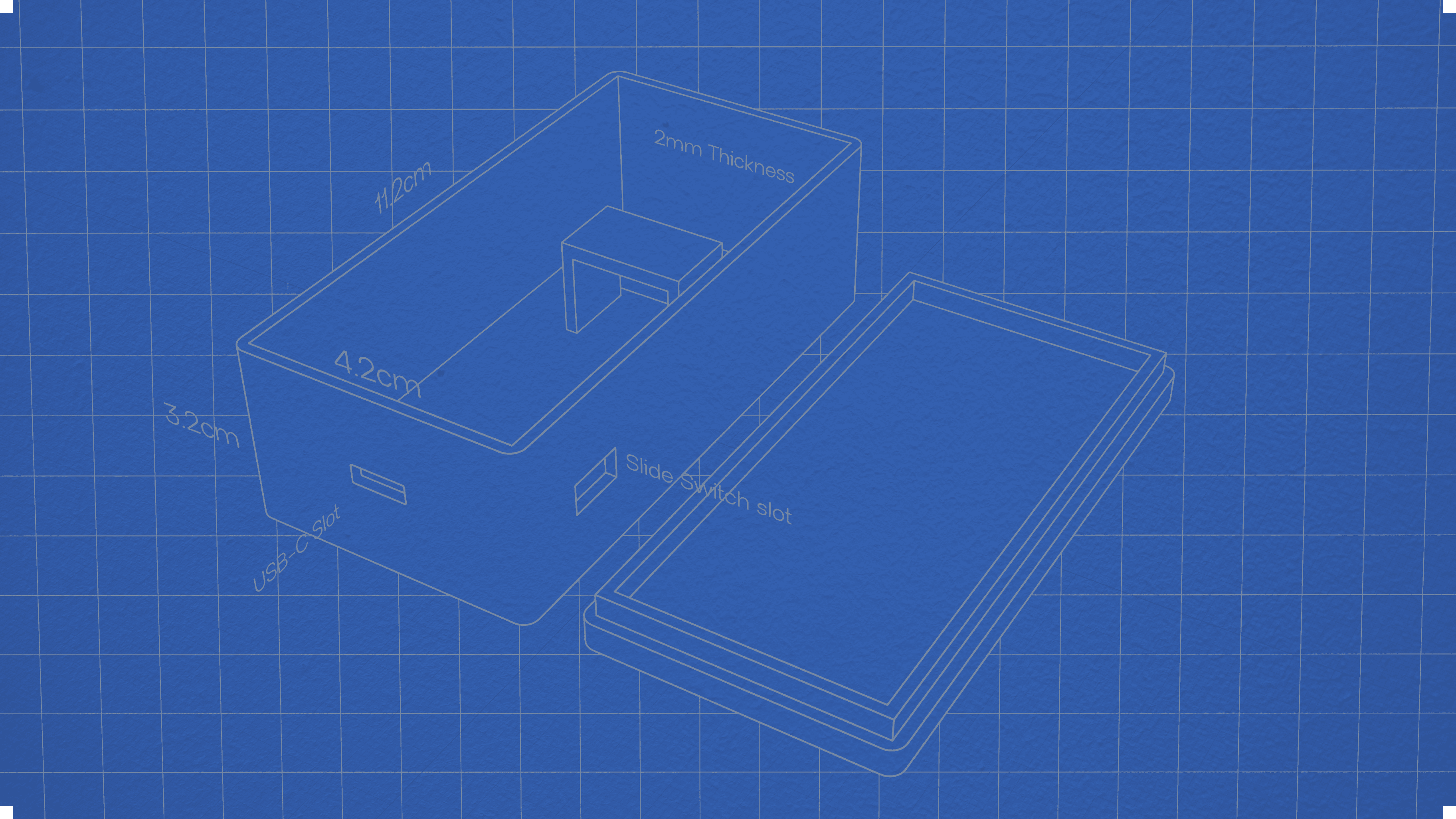
casing design

The output

The output

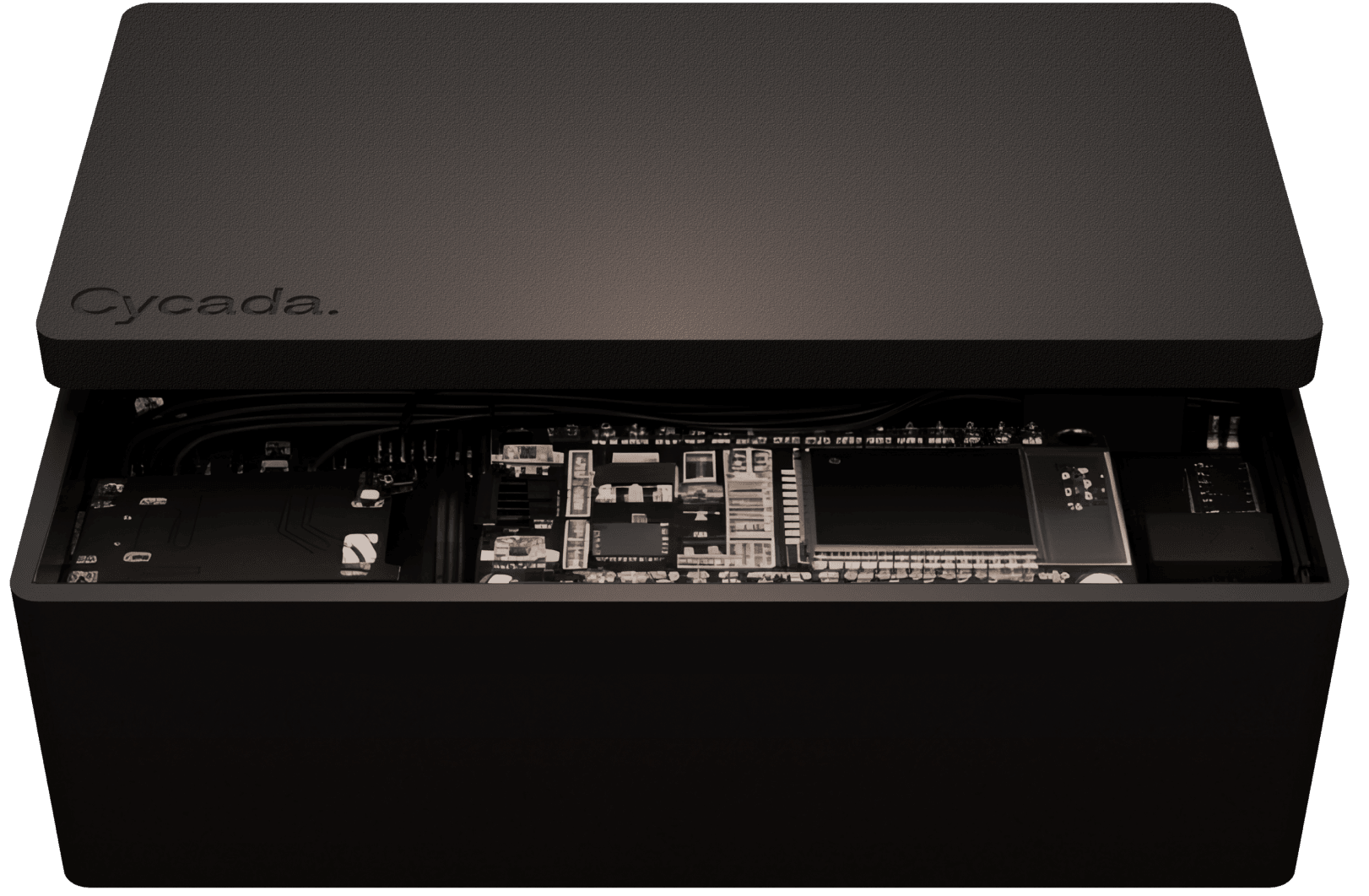
The result is a low-cost, wireless cycle computer that:

  • Works indoors and outdoors

  • Does not rely on GPS

  • Uses your phone as the interface

  • Costs under ₹550 in production

The result is a low-cost, wireless cycle computer that:

  • Works indoors and outdoors

  • Does not rely on GPS

  • Uses your phone as the interface

  • Costs under ₹550 in production

TUI

TUI

The cycle itself becomes the interface.


Pedaling generates data.
The module translates it.
The phone visualizes it.


Interaction is no longer screen-first.
It is movement-first.

The cycle itself becomes the interface.


Pedaling generates data.
The module translates it.
The phone visualizes it.


Interaction is no longer screen-first.
It is movement-first.

the hifi prototype

the hifi prototype

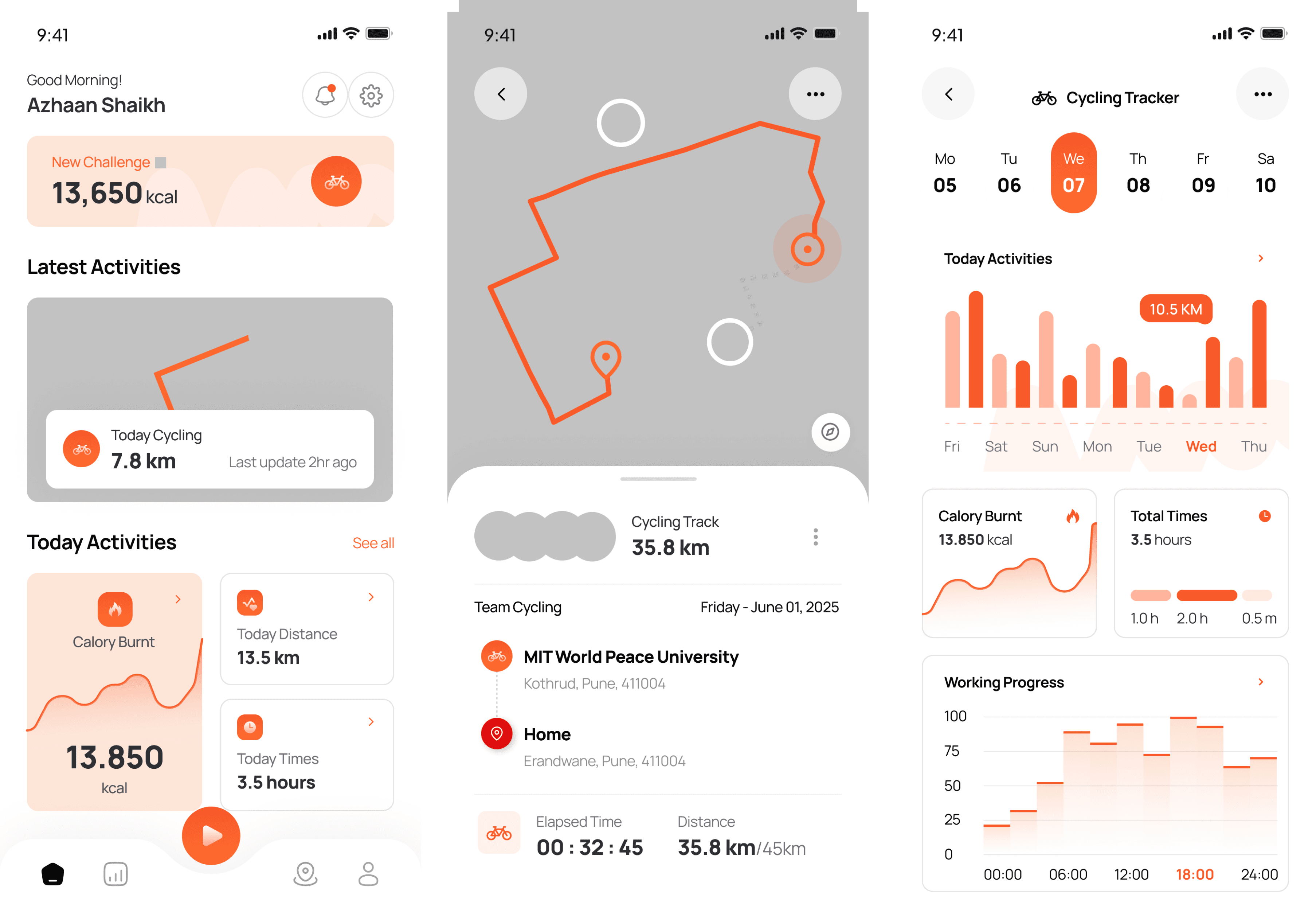
The above screens are for a webapp linked to a firebase database, which will visualise data from the data of the stored trips and give a dashboard to users.

The above screens are for a webapp linked to a firebase database, which will visualise data from the data of the stored trips and give a dashboard to users.